
Introduction
Apple launches a new iPhone model every year, but the iPhone 17 comes with some special upgrades that were previously available only in the Pro variants. In this article, we’ll explore the iPhone 17’s features, performance, specs, and comparisons with the iPhone 16 to find out what’s new, what’s better, and what could be the potential issues.
The combination of a stunning design, new camera modules, and a powerful processor makes the iPhone 17 a tempting option. But how useful are these upgrades in daily use? Let’s take a deep dive.
Key Features of iPhone 17

Display & Design
- iPhone 17 has a 6.3-inch Super Retina XDR OLED display, with a resolution of approximately 2622 × 1206 pixels (≈ 460 ppi).
- ProMotion adaptive refresh rate up to 120 Hz, making scrolling and animations look very smooth.
- Always-On display is also supported (minimum refresh 1 Hz) so that time, widgets, notifications will remain visible without waking the phone.
- Peak brightness is ~ 3000 nits (outdoor mode) and typical brightness is ~ 1000 nits.
- Anti-reflective coating and improved glare control are also provided on the display.
- Design-wise, the iPhone 17 doesn’t look much different from the iPhone 16—but it’s slightly larger and weighs a little more: approx 149.6 × 71.5 × 7.95 mm, weight ~ 177 g.
Camera System (Rear + Front)
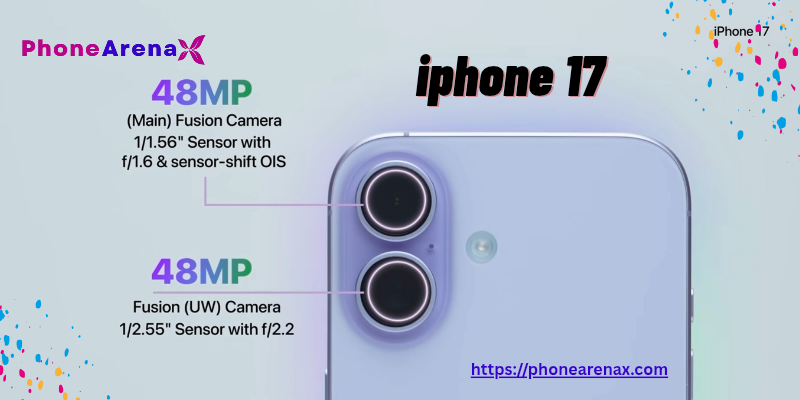
- Rear has “Dual Fusion” camera system: 48 MP Fusion Main (ƒ/1.6, sensor-shift OIS) + 48 MP Fusion Ultra Wide (ƒ/2.2, 120° FOV)
- Main camera provides 2× optical-quality zoom (crop); total optical zoom range 4× (2× zoom in + 2× zoom out) and digital zoom up to 10×.
- Back camera features like Photonic Engine, Deep Fusion, Smart HDR 5, Portrait modes, Night mode, Panorama (up to 63 MP) etc.
Video recording capabilities:
- 4K Dolby Vision up to 60 fps
- Cinematic mode (4K)
- Action mode (2.8K @ 60)
- Macro video, slo-mo, time-lapse etc.
Front Camera:
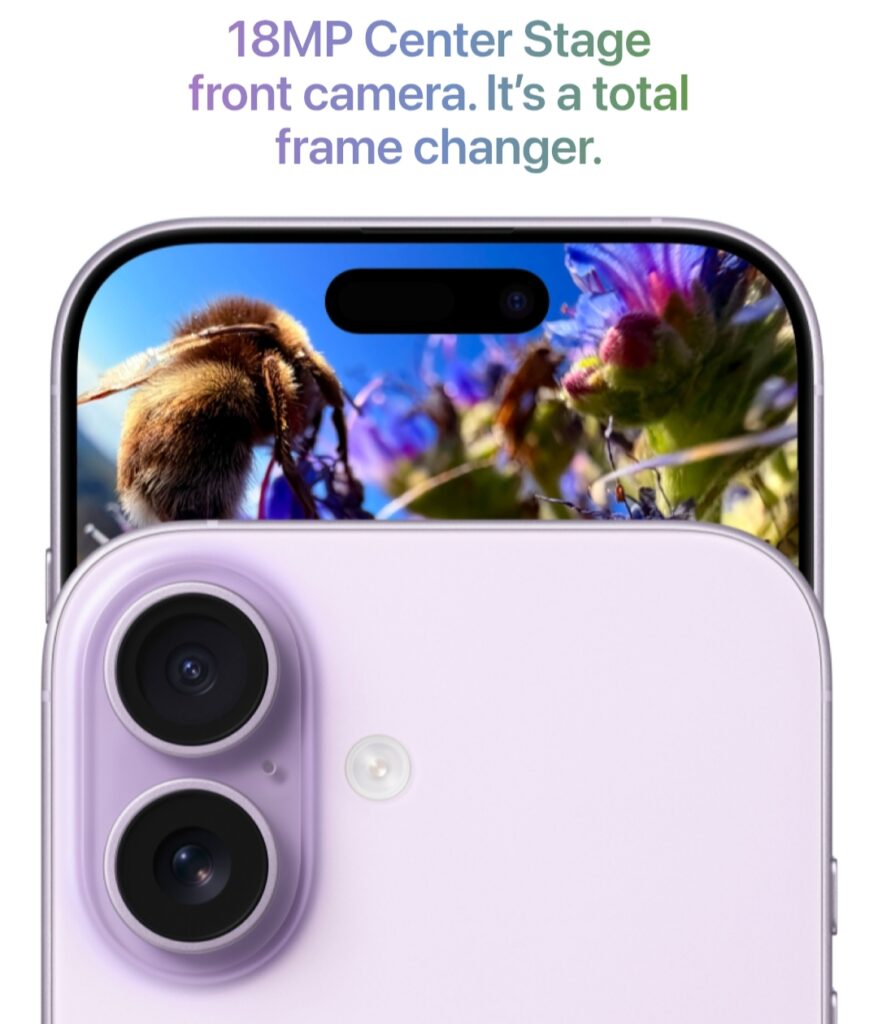
- Front camera: 18 MP Center Stage sensor (ƒ/1.9), autofocus with Focus Pixels, Portrait, Night mode etc.
- Unique feature: The sensor of the front camera is square, so when the phone is held vertically, selfie is possible even in landscape layout.
Processor, Memory & Storage
- A19 chip is used in iPhone 17, with 3 nm architecture.
- CPU, GPU, Neural engine are all upgraded— better performance and energy efficiency.
- RAM: 8 GB (regular model)
- Storage options: 256 GB (base) and 512 GB variant. 128 GB variant has been removed.
Connectivity, Battery & Charging
- Connectivity: 5G, Wi-Fi 7, Bluetooth (latest), NFC, ultra-wideband (UWB), etc.
- Charging & ports: USB-C port (but USB 2.0 data speeds, ~480 Mbps).
- Wired fast charging up to 40 W — 50% charge in ~20 minutes claimed.
- Wireless charging via MagSafe / Qi 2 support.
- Battery: capacity ~ 3692 mAh (14.351 Wh)
Performance & Real-World Use
Benchmark और Speed
- In Geekbench 6 tests, the iPhone 17 overtook the iPhone 16 in both single-core and multi-core tests.
- Real-life use: Less delay in opening apps, smooth multitasking, very little performance degradation even when running heavy games.
Display Experience
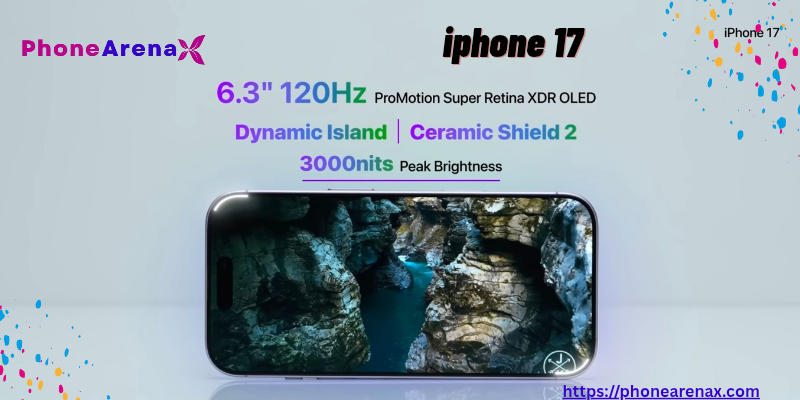
- The 120 Hz ProMotion display makes scrolling, animations, and UI transitions feel very fluid.
- Always-On display feature does not put much load on the battery as the refresh rate can go down to 1 Hz.
- Outdoor visibility and brightness are also significantly improved (3000 nits peak) — the screen will be more readable even in direct sunlight.
Camera Output Quality
- Rear camera quality generally strong: color accuracy, details and low-light performance have improved, especially the ultra-wide sensor which was previously weaker.
- The square sensor and wider lens of the front camera will give advantage in framing selfies and group shots.

- Video recording features like Dolby Vision, Cinematic mode etc. give a professional touch even to casual users.
Battery Life & Charging Realities
- Battery life will be “all day” on daily usage – browsing, social media, camera use, light gaming can all be managed.
- Charging speed 40 W wired claims 50% charge in ~20 minutes, which is quite good duration-wise.
- Wireless/MagSafe charging performance will be a bit moderate, as in earlier models.
Drawbacks / Limitations
- Despite the USB-C port, data speeds are also USB 2.0 level (480 Mbps) — a limitation for high-speed transfers.
- Zoom capabilities are not like a formal telephoto lens — there is a 2× optical-quality crop, which will disappoint some users.
- Higher storage comes with the base model (256 GB), but for users who are used to 128 GB, the cost may increase.
Comparison Table: iPhone 17 vs iPhone 16
| Features | iPhone 17 | iPhone 16 |
| Display | 6.3″ OLED ProMotion, 1-120 Hz, 3000 nits peak | 6.1″ OLED (non-ProMotion), ~2000 nits peak |
| Camera Rear | Dual 48 MP (Main + Ultra Wide) | 48 MP main + 12 MP ultra-wide |
| Front Camera | 18 MP Center Stage (square sensor) | 12 MP TrueDepth |
| Processor | A19 (3 nm) | A18 |
| RAM | 8 GB | 8 GB (similar) |
| Storage Options | 256 GB, 512 GB | 128 GB, 256 GB, 512 GB |
| USB Port & Data Speed | USB-C, 480 Mbps (USB 2.0) | Probably Lightning (older models) |
| Charging | 40 W wired fast charging, Wireless + MagSafe | Lower wired charging (pehle models) |
| Battery Capacity | 3692~ mAh | Slightly lower (depending on model) |
| Weight | ~177 g | Slightly lighter (iPhone 16) |
| Unique features | Always-On display, dual 48 MP, square front cam, 120 Hz | These features not there in base 16 |
Is the iPhone 17 stronger than the iPhone 16?
- Display: iPhone 17 gets ProMotion + always-on + higher brightness, which was not available in the base iPhone before.
- Camera improvements: Ultra-wide sensor upgrade and dual fusion architecture for better shots especially in low light and wide scenes.
- Future-proofing: Higher base storage (256 GB), new chipset, and USB-C adoption.
- Charging speed: 40 W wired fast charging is a boost compare to older.
But if you’re already using the iPhone 16 and your usage is moderate (social media, calls, camera occasionally), the difference won’t be extreme — it’ll mostly be a refined experience.
FAQs
Q1. What are the display specifications of iPhone 17?
Ans: iPhone 17 features a stunning 6.3-inch Super Retina XDR OLED display, offering a crisp resolution of 2622 × 1206 pixels with a pixel density of 460 ppi. Apple has equipped it with ProMotion technology, providing an adaptive refresh rate that reaches up to 120 Hz, ensuring ultra-smooth scrolling and responsive gameplay. The display also delivers impressive brightness levels — 1,000 nits typical, 1,600 nits HDR peak, and up to 3,000 nits outdoors — making it one of the brightest displays on any smartphone. It also supports Dynamic Island, Always-On Display, True Tone, HDR, and a wide color (P3) gamut, ensuring accurate colors and enhanced viewing even under bright sunlight.
Q2. What are the rear and front camera specs of iPhone 17?
Ans: Apple’s iPhone 17 introduces a new 48 MP Dual Fusion camera system, consisting of a Fusion Main and a Fusion Ultra Wide lens. The main 48 MP sensor comes with a 26 mm f/1.6 aperture, sensor-shift OIS, and 100% Focus Pixels, capturing vibrant photos with greater stability and detail. The ultra-wide lens offers a 13 mm f/2.2 aperture with a 120° field of view, perfect for landscape and group photography. The camera system provides 2× optical zoom in and 2× optical zoom out, giving a 4× total optical zoom range, with digital zoom up to 10×. On the front, it features an 18 MP Center Stage camera with autofocus and support for 4K Dolby Vision HDR video recording, ensuring crystal-clear selfies and pro-grade video calls.
Q3. What are the battery life and charging specifications for iPhone 17?
Ans: iPhone 17 offers excellent battery performance, delivering up to 30 hours of offline video playback and up to 27 hours of streamed video on a single charge, according to Apple’s testing. Thanks to its efficient A19 chip and iOS 26 optimisation, power consumption is intelligently managed to extend daily use. The device supports fast charging, reaching 50% in just 20 minutes using a compatible 20 W or higher adapter. It also supports MagSafe and Qi-certified wireless charging, making it convenient for users to power up anywhere without cables.
Q4. What chip powers the iPhone 17, and how is its performance described?
Ans: Apple’s latest A19 chip powers the iPhone 17, built on an advanced 3-nanometre architecture that boosts performance and efficiency. The A19 delivers lightning-fast processing speeds, exceptional graphics rendering, and improved AI computation for next-generation features like Apple Intelligence and enhanced camera processing. It enables smoother multitasking, faster app launches, and console-grade gaming performance while maintaining all-day battery life. Apple describes the A19 as its most powerful and energy-efficient mobile processor to date.
Q5. What durability and materials are used in iPhone 17?
Ans: iPhone 17 is built with premium materials, featuring a sleek aerospace-grade aluminium frame and a color-infused glass back that gives it a polished, durable finish. The front display is protected by Ceramic Shield 2, which Apple claims offers three times better scratch resistance compared to previous models. The device is also rated for water and dust resistance, giving users confidence in everyday conditions, whether during workouts, rain, or outdoor photography.
Q6. What storage options are available for iPhone 17?
Ans: Apple currently lists the iPhone 17 with a 256 GB internal storage option, giving users ample space for photos, 4K videos, apps, and games. However, as with most iPhone models, other storage variants may be offered in specific markets — typically 128 GB and 512 GB versions. The device uses high-speed NVMe storage, ensuring apps launch instantly and large files transfer quickly.
Conclusion
iPhone 17 is a balanced upgrade, with Apple bringing features previously found only on Pro models: a 120 Hz ProMotion display, an always-on screen, a dual 48 MP camera system, fast wired charging, and a USB-C port. The processor upgrade (A19) and higher storage baseline also make this phone future-ready.
But if you’re using the iPhone 16 and your usage is moderate, the benefits of all the features won’t feel so dramatic—you’re sure to get a smoother experience, better photos, and a new display feel.